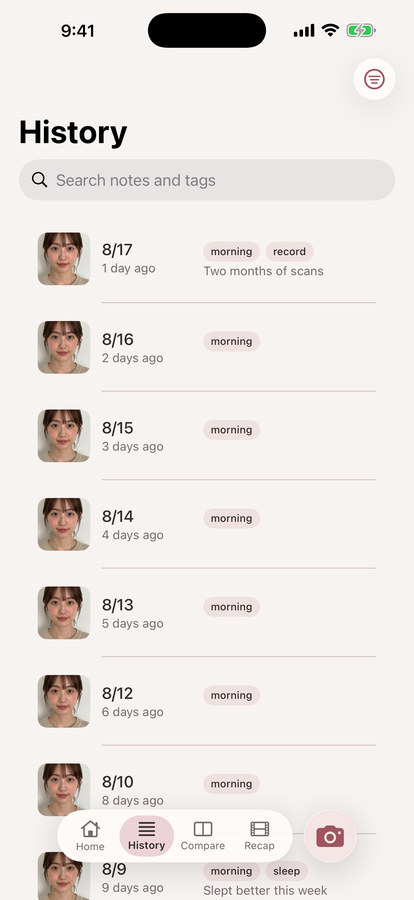
A question neither of us could answer
She has been going for facial treatments for a while, and after each one comes the same question: is this actually doing anything?
We would hold up two photos on a phone and squint. It never settled anything. One is a selfie from above in a bathroom, the other from below in a restaurant; the chin sits at a different angle, the face is a different size in the frame, the light comes from somewhere else entirely. Two photos like that can be made to show whatever you already believe.
So the answer was always a shrug — or worse, whatever the person selling the treatment said.
The fix is not a better photo. It is the same conditions.
What was missing was never resolution. It was repeatability: the same pose, the same distance, the same expression, the same place in the frame, every single time.
So Face Still has no shutter button. It watches through the TrueDepth camera and takes the photo itself, at the moment all four of those match the reference. Short prompts get you there — “Lower your chin slightly”, “Move back a little”. A manual shutter is exactly where the inconsistency would creep back in, so there isn’t one.
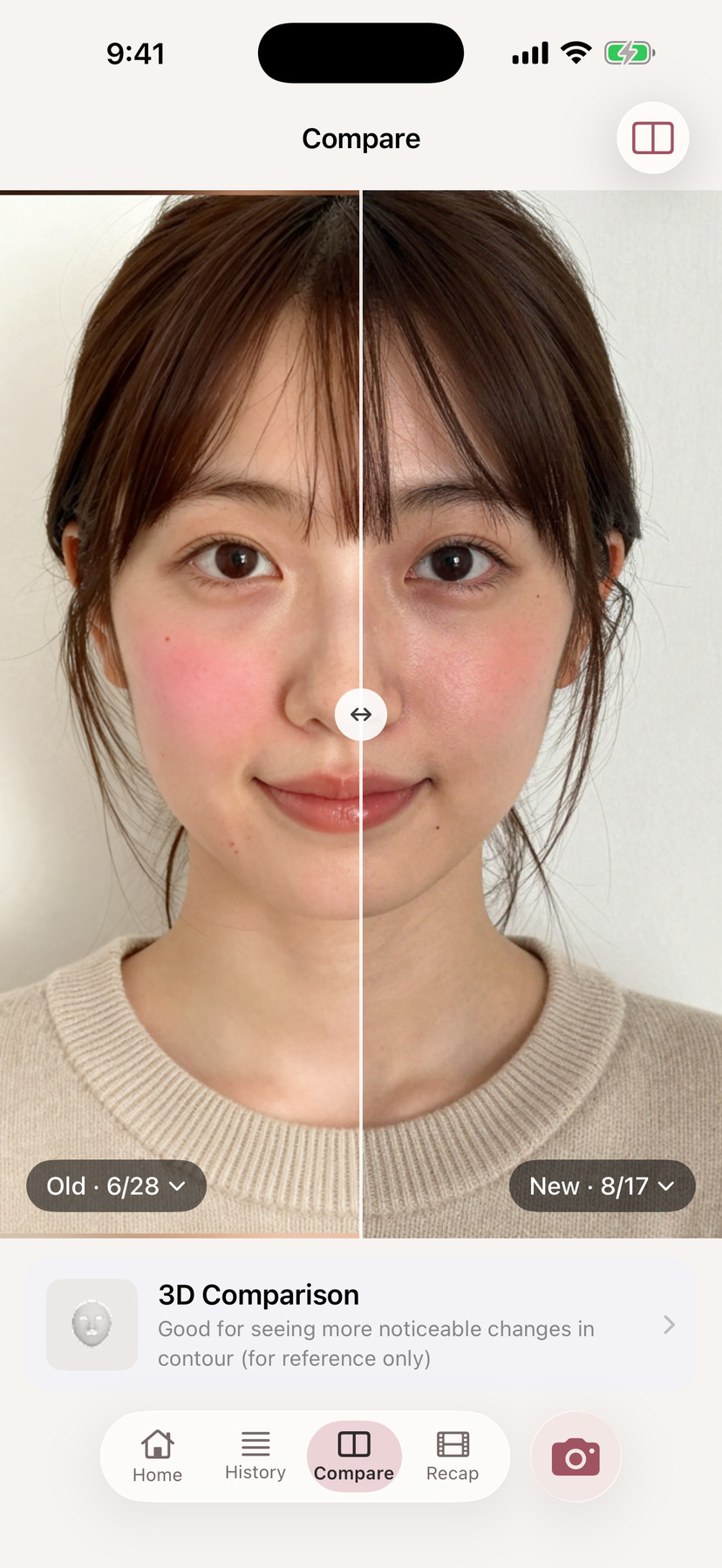
Two photos, the same spot on the face
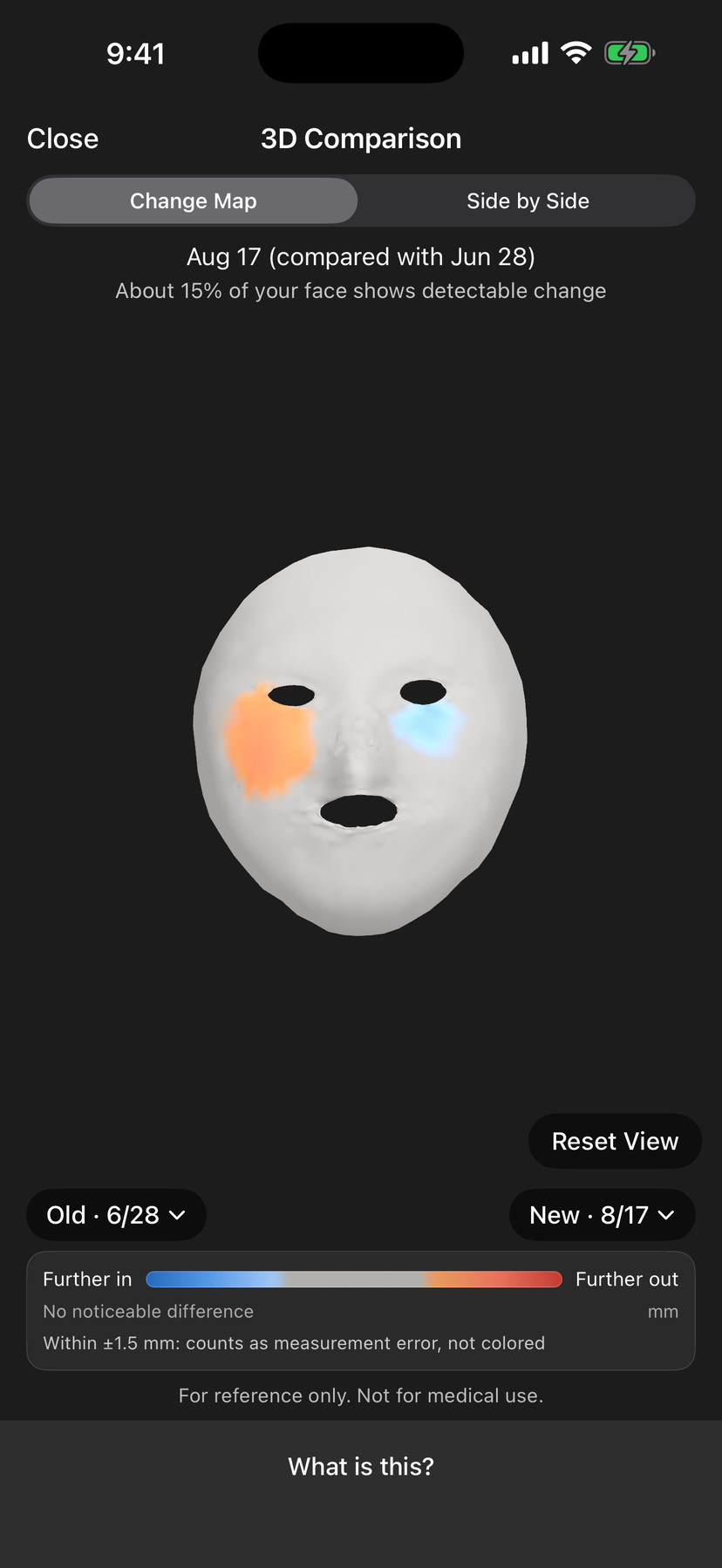
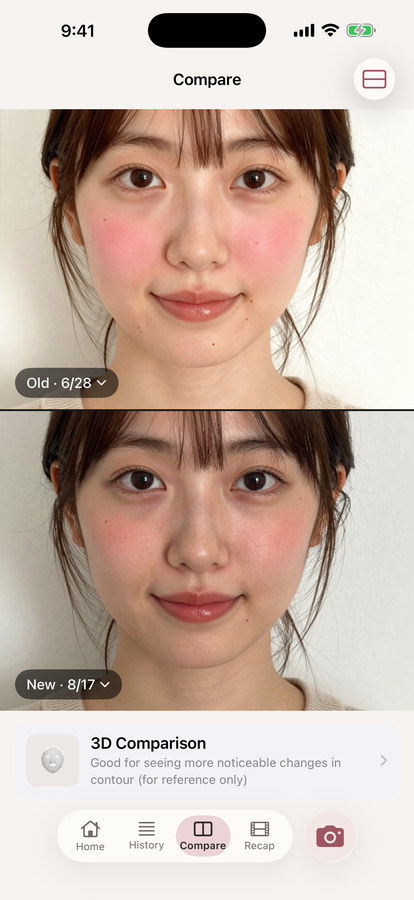
Any two scans can be put together, stacked or split by a divider, and they zoom and pan as one — so you are always looking at the same part of the face in both. Every scan also saves a 3D model beside the photo as supplementary reference, but the photo is the evidence.
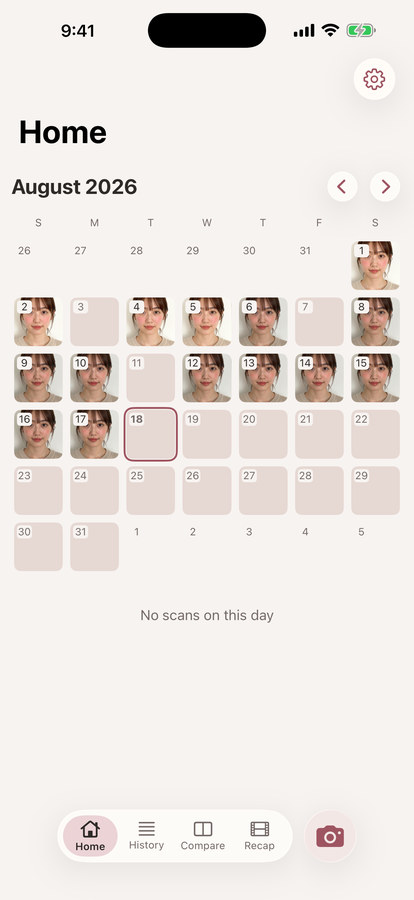
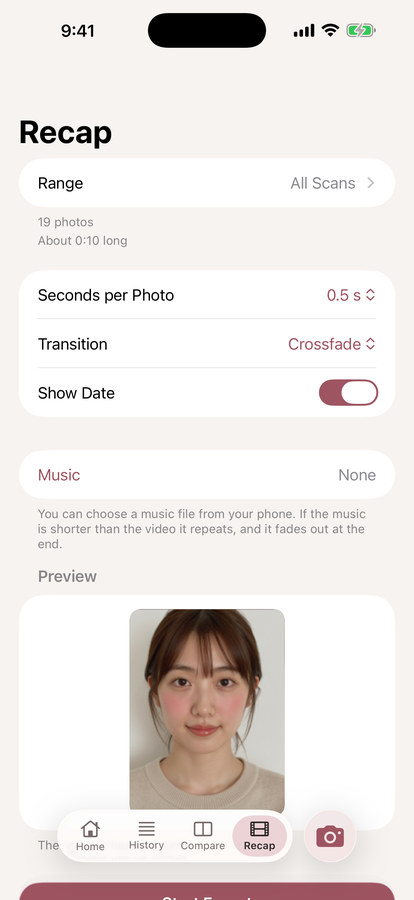
Put a run of scans in date order and you get a short video of the change, with your own music if you want it.
What it refuses to tell you
It never says anything got better or worse. It never scores a scan. It never retouches a photo — what is saved is the file the camera produced. It is not a medical diagnostic or a measurement tool, and it does not pretend to be one.
That restraint is the whole point. The question was “is this working?”, and the honest answer is two photographs taken under the same conditions, weeks apart, with nobody’s opinion in between.